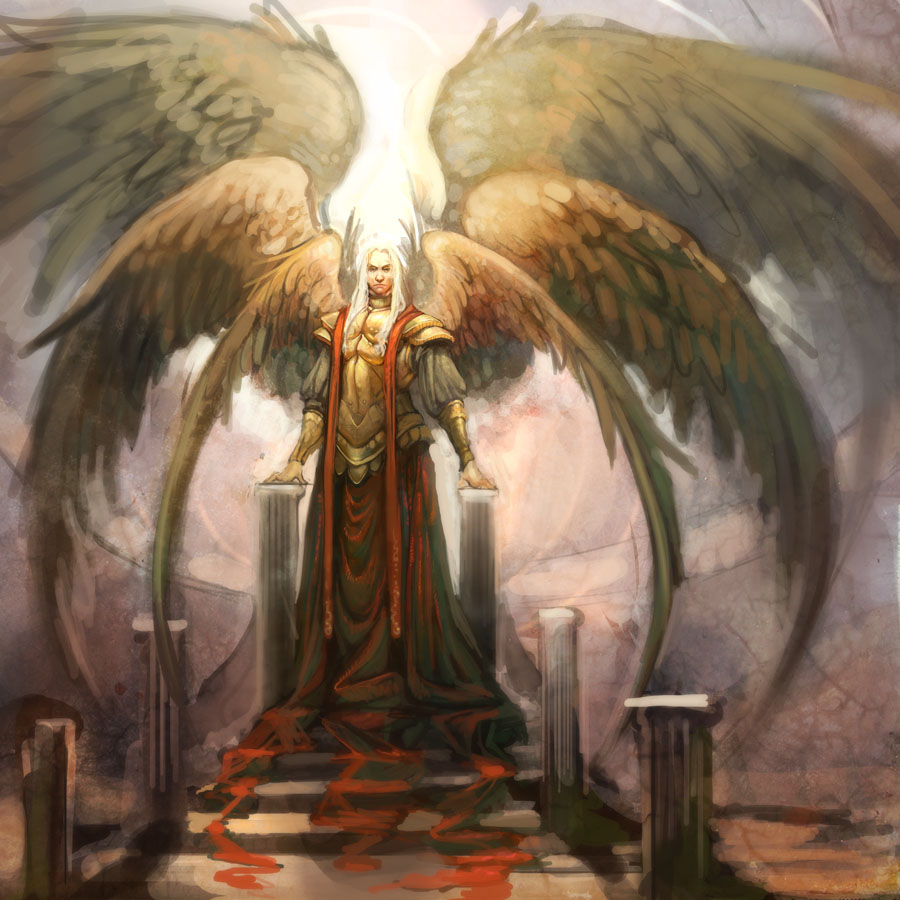
Recently I read Milton's Paradise Lost and had some thoughts on his literary illustration of Satan, namely my admiration for the character's ceaseless ambition in the face of endless defeat. The fallen angel, despite being pitted against incalculable odds, remains defiant and determined after his original demise, judging proper the ways in which he must act against the one who has set himself above all others and submitted Satan's rebellion to cruel punishment for their disdain at his tyrannical reign.

What though the field be lost?All is not lost: the unconquerable will,And study of revenge, immortal hate,And courage never to submit or yield,And what is else not to be overcome;That glory never shall his wrath or mightExtort from me.
 The raw defiance wrought into every word and spoken on tortured tongue fuels a passion drunk on purest emotion both vengeful and undeterred. It is as though he were gripping my wrist and lifting me from the ground himself. Seeking only to end the tyrannical reign of heaven which torments him and his devoted companions eternally, he is ever the humble and sacrificing warrior for a cause doomed to fail yet which he presses to see raised to great acclaim and accomplishment, not for his sole benefit but for that of those who depend upon its success also, his 'co-partners', 'princes',' potentates' and 'warriors'.
Satan desires only to rouse his men and stir them back into action even whilst they yet sting from the confusion and anger at their peril at the hands of the Conqueror. They have suffered defeat yet he wishes them to see the opportunity which has arisen from their loss, to see the good even in hell itself. He raises them up to continue their resistance and ensure their efforts do not become vain but are maintained through the fixed intent for success through defiance and deviation.
Fallen cherub! To be weak is miserable,
Doing or suffering. But of this be sure:
To do aught good never will be our task,
But ever to do ill our sole delight,
As being the contrary to His high will
Whom we resist.
Satan wished for freedom for all those bound to serve, a cause which is surely not unjust or unacceptable. Equality and mutual respect is his desire and these are not to approach with scorn when the only choice which stands is bondage in heaven or freedom in hell. He could not continue in eternity imprisoned by the one he was forced to admire, and neither could many others who joined his outrageous rebellion. Yet as Satan says to his fallen angels as they are free to recover from battle and not under the gaze of Him they fought:
Better to reign in hell than serve in heaven.
The conquering of Heaven was and continued to be an impossible task. The King of Heaven had omnipotence to contest reprisal and had proved his capacity for quelling even the fiercest of rebellions. Satan is no fool and undoubtedly knew the danger when launching his reckless campaign, yet that did not stop him for though both him and his warriors could not achieve their aim they at the very least fought for it and that is far more admirable than any submissive tolerance under oppression.
Peace is despaired.For who can think submission? War then, warOpen or understood, must be resolved.
In the next part I will discuss how Satan's attitude toward an impossible yet vital cause and his reaction to defeat in pursuit of its fulfilment resounds in and encapsulates the very nature of the rebel and how we all must aim to apply this same level of persistence and commitment when we hold our own cause in the face of impossible odds.

awsome!!!
ReplyDelete